For a General Theory of Simulations
- Design
- not recorded
- Published
- DOI
- 10.1162/ANTI.5CZZ
- Length
- ~9.0k words
- Original
- Read the original
A general theory of simulations explores the roles of simulation in science, politics, identity, and cognition—shaping perception, action, and reality through recursion, reflexivity, and technological mediation.
Summary#
Benjamin Bratton's "For a General Theory of Simulations" is the text of a lecture given at the USC School of Cinematic Arts and published in the Antikythera journal in May 2025. It argues that simulation is the defining but untheorized practice of the present: science, finance, cognition, AI training, entertainment, governance, warfare, and personal identity all now run on models that feed back into what they model. Bratton proposes a small vocabulary for a theory that does not yet exist (descriptive, predictive, and projective models; recursion and reflexivity; ontological asymmetry; placebo simulation; simulation anxiety) and tests it against cases from black holes and Biosphere 2 to The Truman Show and Forensic Architecture. The governing figure is the shadow, understood not as a deceptive copy but as a second thing with an agency of its own.
The argument#
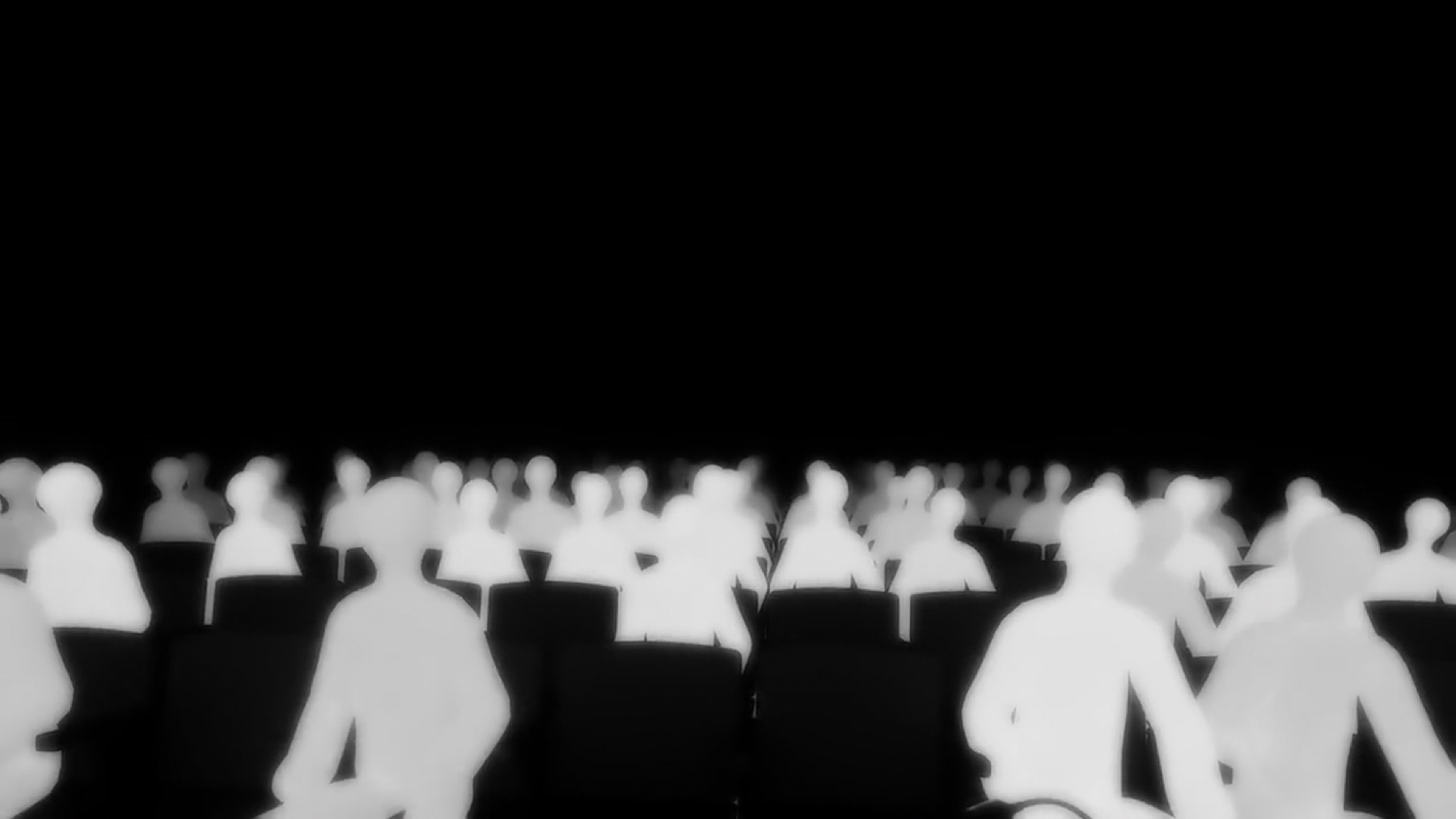
Bratton opens by observing that the talk is training data for some future model of the present, and that moments in time, like people, cast shadows. Western philosophy begins in suspicion of shadows: Plato's cave is a theory of simulation, and philosophy may have been born from that "foundational paranoia." Javanese shadow puppetry inverts the cave, presenting shadows as direct access to the mythic systems that daytime reality obscures.
The theoretical core is brief. All simulations are based on models, but not all models are simulations. Models are descriptive (valued for correspondence), predictive (valued for anticipation), or projective and normative (valued for articulating a preferred world that does not yet exist). Which kind is in play is often unclear, and acting on a model can change its kind: Oedipus receives a speculative prophecy that becomes predictive and then descriptive because he acts through it. Simulations are therefore not representations but technologies with feedback built in. Recursive simulations affect what they simulate directly and automatically, as Donald MacKenzie's financial models do ("an engine not a camera"); reflexive simulations close the loop through interpretation, mobilizing action to fulfill or prevent a future the simulation implies.
The cases then run from simulations that disclose reality to simulations built as illusion: scientific simulation as an existential technology in Stanislaw Lem's sense, cognition as predictive simulation and AI as "simulated intelligence," toy worlds for AIs and VR as a toy world for people, ontological asymmetry as the condition many simulations require, politics as scenario planning and countersimulation, and digital identity as a set of personas living in data-center "shadow cities." The conclusion names simulation anxiety as the characteristic affect of a civilization founded on simulations and argues that, because technology is now ahead of theory, philosophy's job is a direct encounter with simulation that produces new concepts.
Section by section#
Shadow Metaphysics#
A shadow is both a subtractive absence and a new object that tracks its source while changing shape in ways the source cannot. Cartoon characters who peel off or box with their shadows dramatize a psychological worry, the loss of control over the external effects of one's agency. Plato's cave makes this philosophical, extending it to the possibility that everyday objects are themselves shadows of prior forms. Against Plato, Bratton recalls all-night wayang kulit epics in Yogyakarta, watched with a copy of Baudrillard's Simulations in his bag, and proposes that shadow puppetry inverts the cave: the shadows present what daytime reality hides.
Part 1: A General Theory of Simulation#
After the three kinds of model, Bratton introduces the two feedback principles. The recursive case is automatic, as when insurance pricing of future risk decides what is permitted now; the reflexive case is mediated by interpretation and response. Bratton calls reflexive simulations the most nuanced of the recursive ones, which leaves open whether reflexivity is a sibling category or a sub-type; the text uses both framings.
The second half turns to science. Scientific simulations make otherwise inconceivable realities available to thought, which makes them existential rather than instrumental technologies in Lem's distinction, a point Bratton credits the evening's host with raising. Models are radical reductions, and in astrophysics the reduction is the science: exoplanets, almost all discovered since 1989, are known through models that Lisa Messeri's ethnography shows scientists experience as places. Often the simulation comes first. Black holes were described mathematically, rendered for Interstellar in consultation with Kip Thorne, and only afterwards imaged at the center of M87 by the Event Horizon Telescope team. The entanglement of entertainment and science is structural: scientific simulation depends on cheap GPUs, and GPUs are cheap because of video games. "Science is paid for by fun." Climate politics is the reflexive case at planetary scale: the Anthropocene is an accomplishment of climate simulations, and action is taken now to prevent a modeled 2050. Activists might not like the idea, Bratton says, but the simulations are why they are in the streets.
Part 1: Intelligence as Simulation / Simulation as Intelligence#
Cortical columns constantly predict the next perception and compete to organize action. Bratton lines up Friston's free-energy principle, Jeff Hawkins, Andy Clark, and Hofstadter's "you are a loop" as convergent versions of the claim that the model-test-feedback cycle is not something intelligence does but how it works. Making artificial intelligences out of the same capacity is therefore to be expected. But AI's development has hinged on simulation anxiety: the Turing Test defines the non-simulated human by its difference from the simulation, so any blurring unsettles who we are, a psychological analogue of model collapse. The section ends with a new simulation politics. If a model governs the world, redirect it by feeding it contrived data, by poisoning or by performing the reality you want it to believe, walking back and forth across a street so the model thinks there is traffic. Bratton calls this the future of politics as gamified recursive simulation.
Part 2: Toy Worlds and Digital Twins#
Driverless cars are trained in toy worlds, reductive simulations in which they can bump into walls and run through many generations in an instant. For an AI the boundary between a world built of data and a world perceived as data is fuzzy, and trainers exploit that fuzziness by mixing real and virtual collaborators. The AI's world is a simulation of ours, and for the AI our world is part of the omnisimulation it simply calls reality. Bratton then marks the lecture's turn from simulations that give access to reality toward simulations as constructed synthetic experience.
Part 2: Computational Virtual Environments#
VR is a toy world for people, "a digital twin for experience itself." If scientific simulation reaches ground truth through abstraction, VR may free experience from ground truth. Bratton proposes "baseline reality" as the name for the non-virtual, because it makes the virtual the referent against which the real is defined. Nanome, spun out of his former UC San Diego lab, uses VR to make protein binding tactile for drug-discovery clients. Augmented reality overlays "programmed interactive hallucinations" so that shadow and cave merge, while John Carpenter's They Live offers a reverse AR whose sunglasses subtract ideological illusion, "critical theory as Ray-Bans." The Las Vegas Sphere as Kracauer's mass ornament and the composited Marvel image complete the claim that cinema was already a virtual environment.
Part 2: Physical Virtual Environments#
The hydraulic model of San Francisco Bay is a physical digital twin. The replica of the Chauvet cave, built so visitors can see 32,000-year-old art without damaging it, is "not quite a theme park and not quite not one." Biosphere 2 is the cautionary case: a sealed society meant to prototype off-world settlement, run by a 1970s theater collective rather than NASA, overrun by ants and cockroaches and ending in virtual famine. Bratton reads it as a successful simulation of how closed-loop utopias implode.
Part 3: Ontological Asymmetry#
Ontological asymmetry is the condition in which one fraction of participants knows a thing is a simulation and another does not. Ender's Game is the paradigm: a cadet who thinks he is playing a battle simulator has destroyed inhabited planets, on the theory that he would not have acted had he known. The Butters episode of South Park gives the limit case Bratton names placebo simulation, a boy who believes he is in a VR replica of his school and is wearing a snorkel mask. The Truman Show and Westworld are mirror images, protagonist unknowing in one and background characters in the other, and in both the drama is the breaking of the asymmetry. The Milgram experiments show the asymmetry causing harm, and consent is the obvious issue. The part then turns to deliberate suspensions of knowing. Military VR re-enacts trauma for PTSD; The Rehearsal pre-enacts anticipated trauma so it might not occur; WandaVision reverses it instead, "an egg unscrambled by the preferred artificialization."
Part 3: Political Simulationism#
Governance runs on simulations that give a sense of control through visual coherence, and this often works because what an institution most needs is that its representation of coherence succeed as rhetoric. Scenario planning, the Cold War technique of RAND, Herman Kahn, and Pierre Wack, is institutionalized reflexive simulation: the rendering of a contingent space of futures as science-fiction stories told in non-fiction rhetoric, recursive because following a scenario to its conclusion helps bring it about. With planetary computation, simulation also becomes a real-time medium of adversarial relations. Simulations act as policy algorithms, and competition produces countersimulation: camouflage, jamming, decoys, misinformation.
Part 3: Simulation Before and After Violence#
Fort Irwin, a simulated Middle Eastern city in the California desert with real explosions, stands for simulation in anticipation of violence. Forensic Architecture, Eyal Weizman's group, reconstructs purported state crimes with architectural modeling and submits the same work to courts and museums; Bratton notes that each case ends with the accused guilty, evidence that fictions decide the real as much as facts are posed as fictions. Two films run the other way. The Battle of Algiers, shot newsreel-style in the original locations with an FLN leader playing himself, simulated past violence and served as a template for future insurgency, screened at the Pentagon after 9/11; Bratton calls it hyperstitional. The Act of Killing casts the aged perpetrators of the Indonesian massacres as their younger selves, a simulation closer to the repetition of trauma, except that the trauma is asymmetrically distributed between oblivious perpetrators and tormented survivors.
Part 3: Back to the Shadow: Persona#
Under planetary-scale computation the individual person is the base unit of sensing, analysis, and recursion, doubled by digital shadows that we possess and are possessed by. At the airport, the decision to let a body pass is made on risk models run against personas in "a near-distant shadow city called the Cloud." The persona is also a product. Bratton traces the licensed double from Lem's Futurological Congress (1971) and Koolhaas and Daalder's unfilmed Hollywood Tower (1974) to KISS sending avatars on tour and the Hollywood strikes as a fight over the shift in labor power from those who make training data to those who make models. Shadow cities close the part: data centers housing hundreds of millions of personas and a few dozen workers, a posthuman urbanism in practice. These are not virtual: when two people chat, the point of contact between their personas is physically located somewhere neither of them lives.
Conclusion: Simulation Anxiety#
Simulation anxiety is first the Philip K. Dick worry about whether something is a simulation, but in a society founded on simulations anxiety as such tends to take this form, and each simulation built to manage it produces uncertainty of its own. The examples concern authenticity, from forgery as an art genre to the Navajo-owned Santa Fe factory that once mass-produced knockoffs of handmade jewelry. Simulated humans produce opposite anxieties: Makoto Nishimura built Gakutensoku in the 1920s to seek union between the human and its double, while the Turing Test seeks to keep them bordered. Paro, the robotic seal given to dementia patients, shifts the question from whether we can tell to whether those involved know or care. The closing thoughts restate the project: we use simulations for everything and theorize them hardly at all, and the fish does not theorize water. When technology is ahead of ideas, as now, philosophy should stop projecting its truisms onto technology and encounter it directly. Simulation is "a critical practice without a sufficient theory."
Key concepts#
- Descriptive, predictive, and projective models — Three kinds of model distinguished by what gives them value: correspondence to a reality, anticipation of a future state, or articulation of a preferred reality that does not yet exist. Acting on a model can move it from one kind to another.
- Reflexive vs. recursive simulation — Recursive simulations automatically affect what they simulate and are updated by it; reflexive simulations do so through interpretation, mobilizing action to fulfill or prevent an implied future. Reflexive vs. Recursive Simulation
- Existential technologies — Lem's category, used here for simulation and computation: technologies that change how the world is understood rather than only acting in it. Existential Technologies
- Toy worlds and the sim-to-real gap — Reductive, accelerated simulations in which AIs learn to perceive and act before being moved into the world, whose boundary with the world is fuzzy for the AI. Sim-to-Real Gap
- Ontological asymmetry — The condition in which some participants in a simulation know it is one and others do not; often required for the simulation to work. Ontological Asymmetry
- Placebo simulation — The limit case of asymmetry: someone believes they are in a simulation when there is none. Placebo Simulation
- Countersimulation — Techniques for degrading a rival's simulation in a geopolitics where governance depends on accurate models of global systems. Countersimulation
- Shadow cities — Data centers and logistics landscapes housing the personas through which people are governed and communicate: a physical, discontiguous megacity for objects and shadows. The Double
- Simulation anxiety — Anxiety about whether something is a simulation, generalized into the characteristic affect of a society founded on simulations. Simulation Anxiety
Connections#
- Speculative Philosophy of Planetary Computation is the program statement this lecture expands; its "Recursive Simulations" section has the same Plato-versus-shadow-puppet opening and the same claim that scientific simulation discloses reality. Agreement.
- After Alignment shares paragraphs nearly verbatim with Part 2 (toy worlds, the sim-to-real passage) and adds the personal-AI framing in which the human may be the NPC or the digital twin. Consistent.
- Infinity Mirror by Maughan, Pham, and Fear gives the studio's own general theory with a different taxonomy (concrete, mathematical, computational models), the GPU-and-games economics Bratton only gestures at,. Agreement, with the later work more systematic.
- Some Movements of Models by de Monchaux historicizes recursive modeling from Panama Canal controls through SAGE to Kubrick and ends on the paradox that the more a model shapes reality the more closed to view it becomes. That pessimism is in tension with Bratton's insistence that simulation is how reality is disclosed.
- Synthetic Counteradaptation turns the countersimulation of Part 3 into a scenario of rival national simulators leaking and fabricating information.
- Hemispherical Stacks is a collection of scenario fictions, the genre Bratton describes as institutionalized reflexive simulation.
- What Is Intelligence? by Agüera y Arcas makes prediction the definition of intelligence, the premise of Bratton's "intelligence as simulation" section stated as a thesis.
- The Stack supplies earlier versions of the persona material: the User layer's account of the human as a position addressed by platforms, and the Cloud layer's data-center geography that becomes "shadow cities" here.